
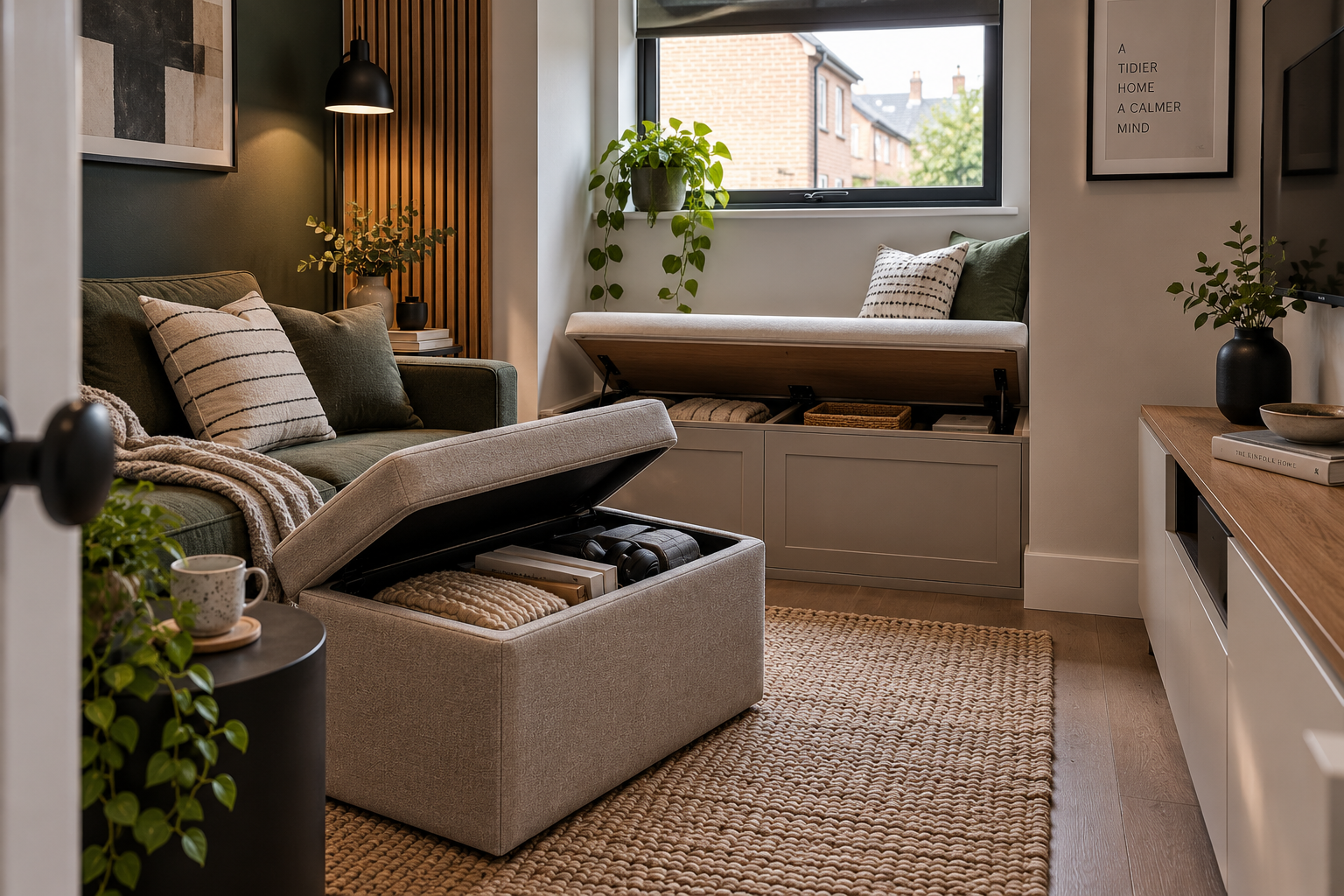
Before you add more storage, look for unused space
When we run out of storage, the obvious solution is usually to add some.
Another cabinet.
Another shelving unit.
Another piece of furniture that promises to finally give everything somewhere to live.
Sometimes that's exactly what's needed. But every new piece of furniture also needs somewhere to go — and when space is already limited, solving a storage problem can create a floor-space problem instead.
So before adding something new, it can be worth looking at the space your home already has.
The area above a doorway. An awkward gap beside a chimney breast. The empty space underneath a bench. The wall around a window.
Individually, these areas might not seem particularly useful.
Together, they can represent a surprising amount of unused space.
Here are six places worth another look.
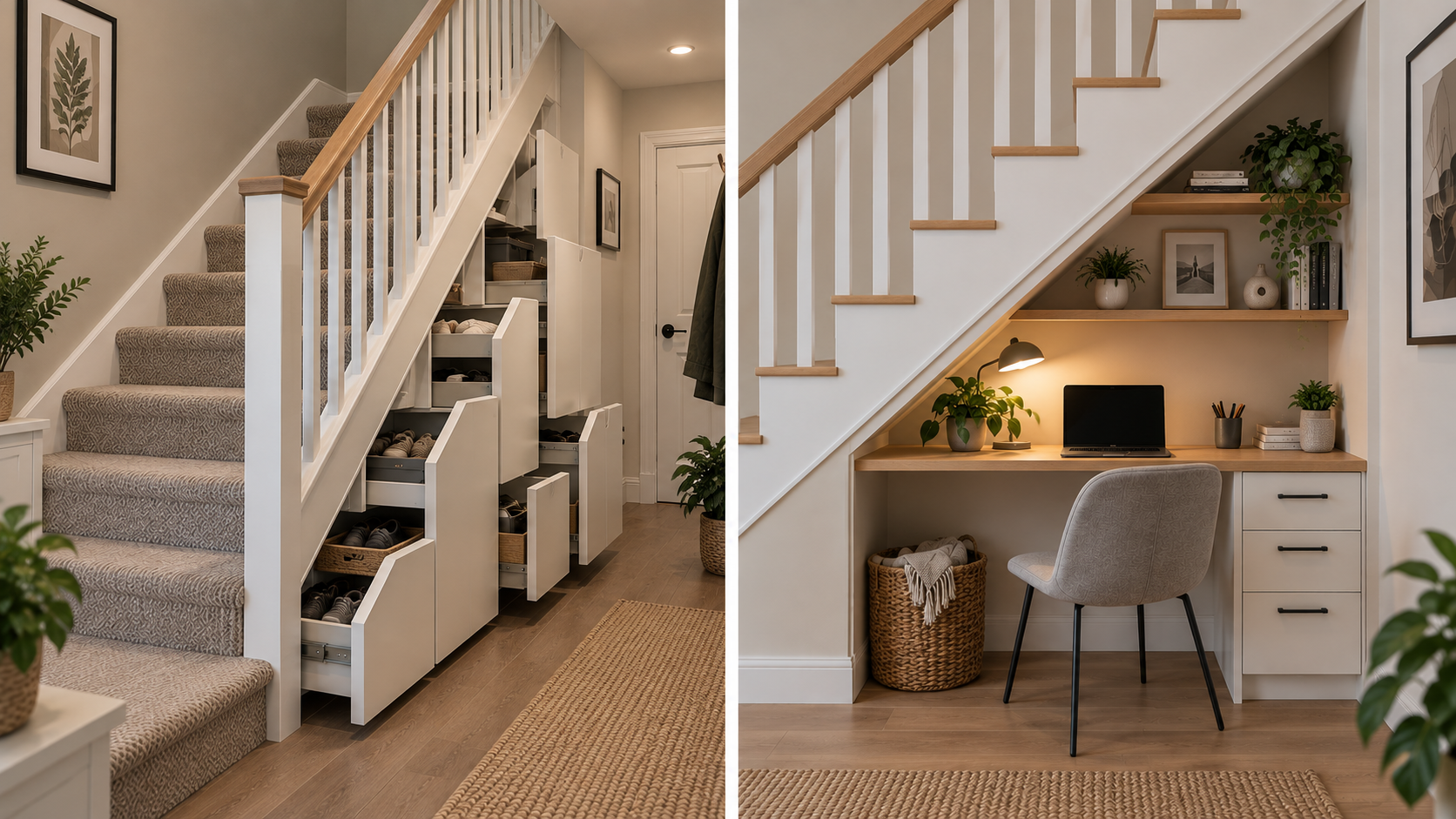
1. Under the stairs
The space beneath a staircase is probably one of the best-known examples of unused space, but that doesn't mean we're always making good use of it.
In some homes, it becomes a cupboard where everything gets pushed through the door and slowly disappears towards the back.
But the unusual shape can lend itself to much more deliberate storage.
Fitted pull-out drawers can make use of the deepest sections. Open shelving can turn part of it into book or display storage. A combination of cupboards and smaller drawers can give everything from shoes to cleaning equipment a proper place.
And it doesn't have to involve bespoke joinery.
If the area is open, appropriately sized shelving, baskets or freestanding units can offer a much simpler and cheaper way to use some of the same space.
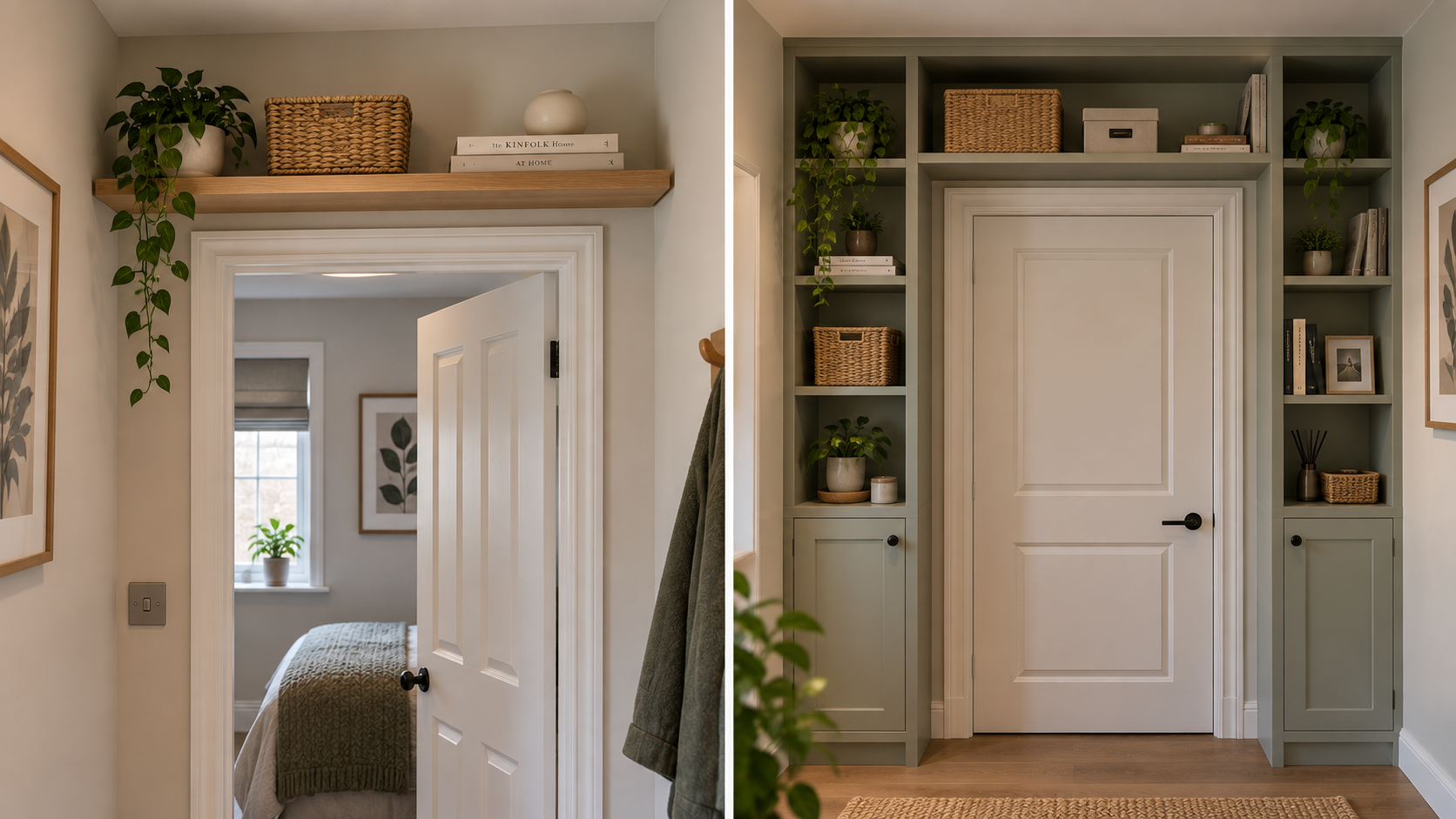
2. Above doors
Look above the doors in your home and there's a good chance you'll find a small section of wall that isn't being used.
In the right space, a securely fitted shelf above a doorway can provide a little extra storage without taking up any floor space. It can be useful for small, lightweight items that aren't needed very often — perhaps a few light books, a small lightweight storage basket or decorative items.
This isn't the place for heavy boxes or anything you wouldn't want falling from height. As with any overhead storage, shelves should be securely fixed, suitable for the wall they're attached to and capable of supporting the intended weight.
The idea isn't to fit as much as possible above the door. It's simply another example of looking at parts of a room that are usually overlooked and asking whether a small amount of carefully considered storage could be useful.
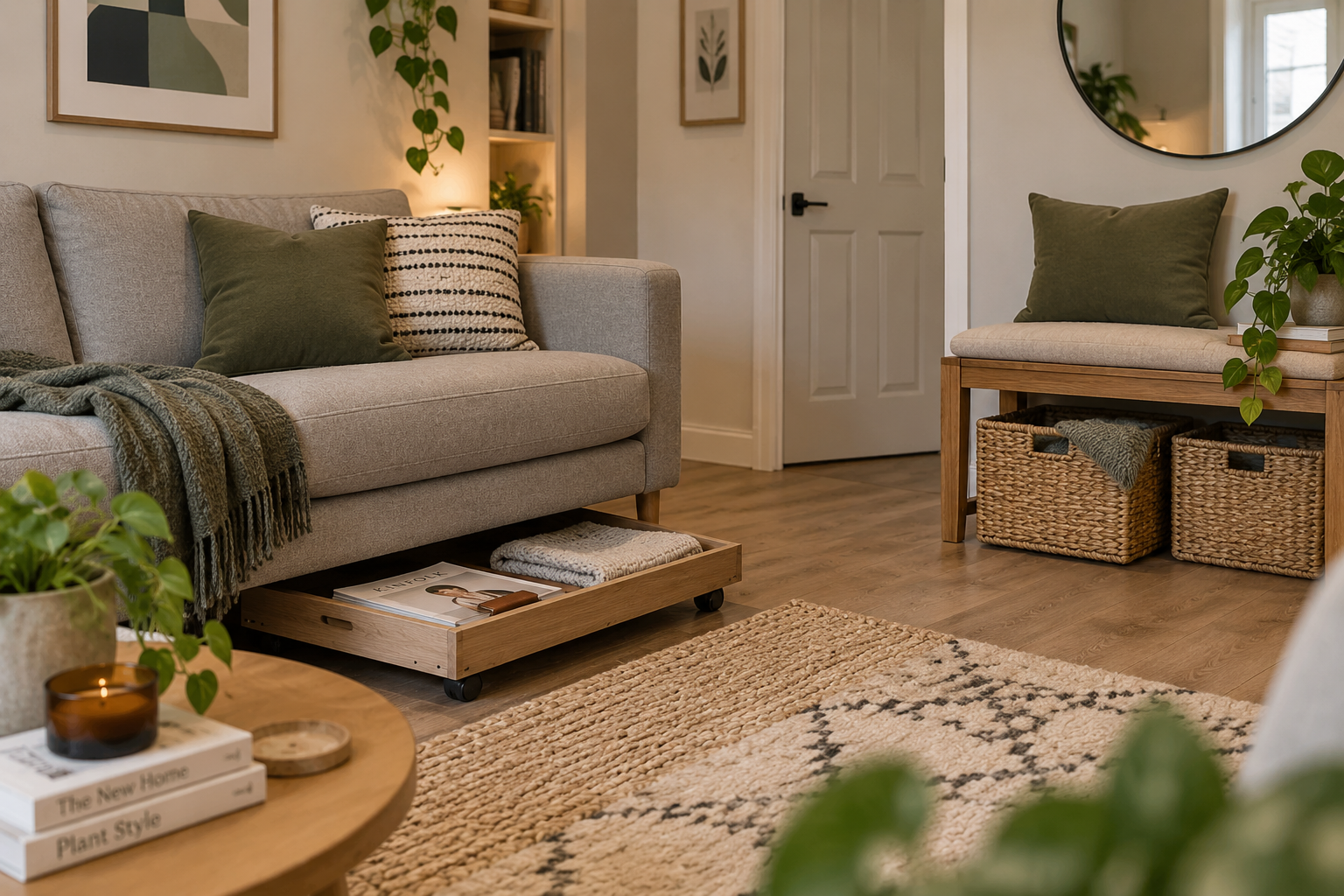
3. Under the furniture
We tend to think about what furniture stores inside it.
Sometimes it's worth looking underneath it too.
Beds are the obvious example, but they're not the only one. Benches, sofas and other raised furniture can leave useful space underneath that might otherwise collect little more than dust.
Purpose-built drawers can be great, but simple storage boxes or baskets can work too.
The important thing is making sure whatever you put underneath remains reasonably easy to access. Creating storage that requires moving half the room every time you need something isn't particularly useful.
And when you're buying new furniture, it can be worth asking whether the piece could do more than one job.
A window bench that also opens for storage, for example, earns its footprint twice.
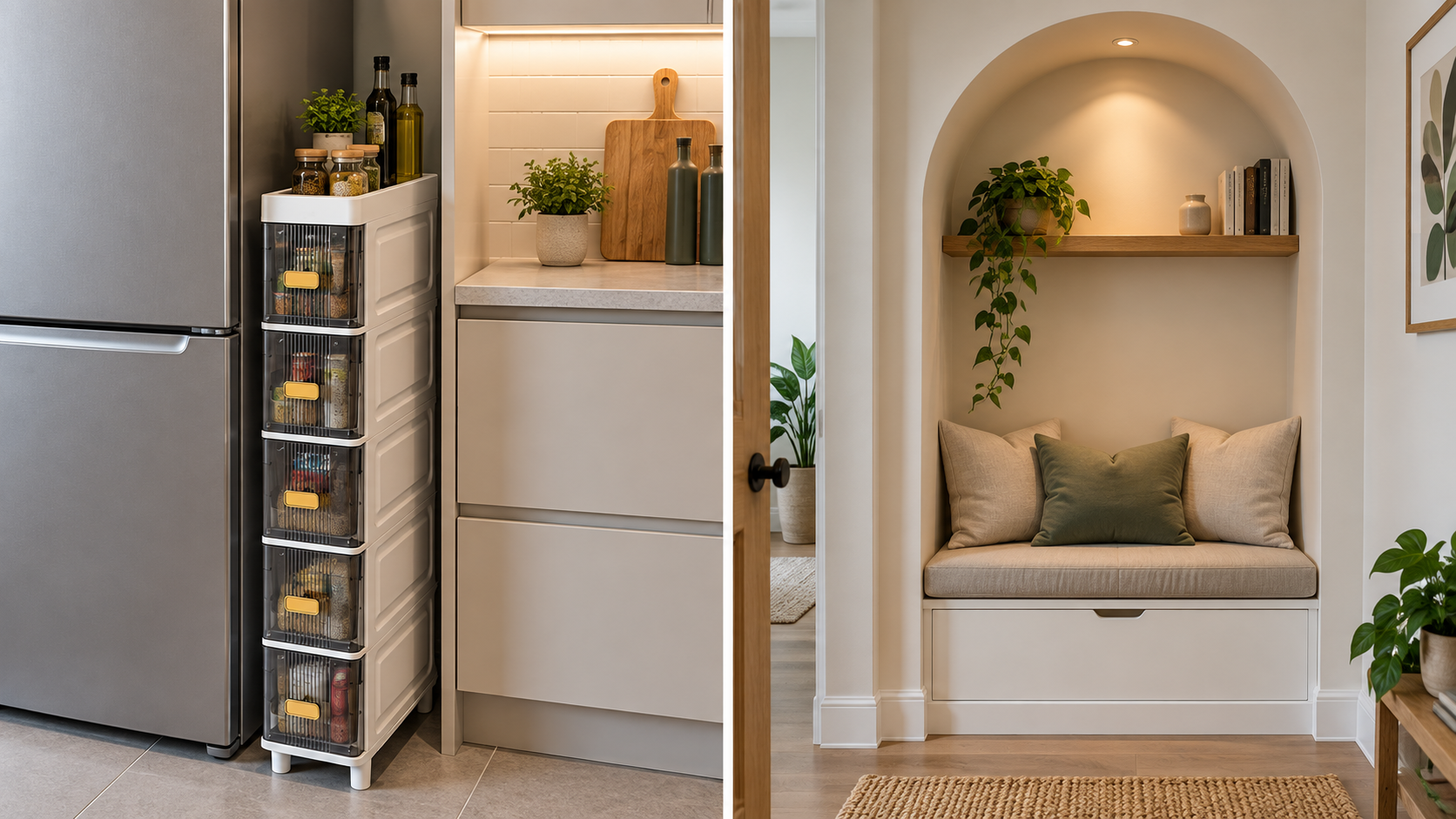
4. Awkward alcoves and narrow gaps
Homes aren't always made from convenient straight walls and furniture-sized gaps.
Chimney breasts create alcoves. Older properties have unusual corners. Kitchens somehow develop narrow gaps that aren't quite wide enough for anything you already own.
These spaces can be frustrating precisely because standard furniture isn't designed for them.
But that can also make them useful.
A narrow set of shelves might create storage without projecting far into the room. An alcove could take floating shelves, a small cabinet or a combination of the two.
Even a very narrow kitchen gap might have enough room for a slim trolley or pull-out storage.
You don't necessarily need to fill every gap you find — some empty space is a good thing — but an awkward area that's already getting in the way is worth reconsidering.
5. The full height of the wall
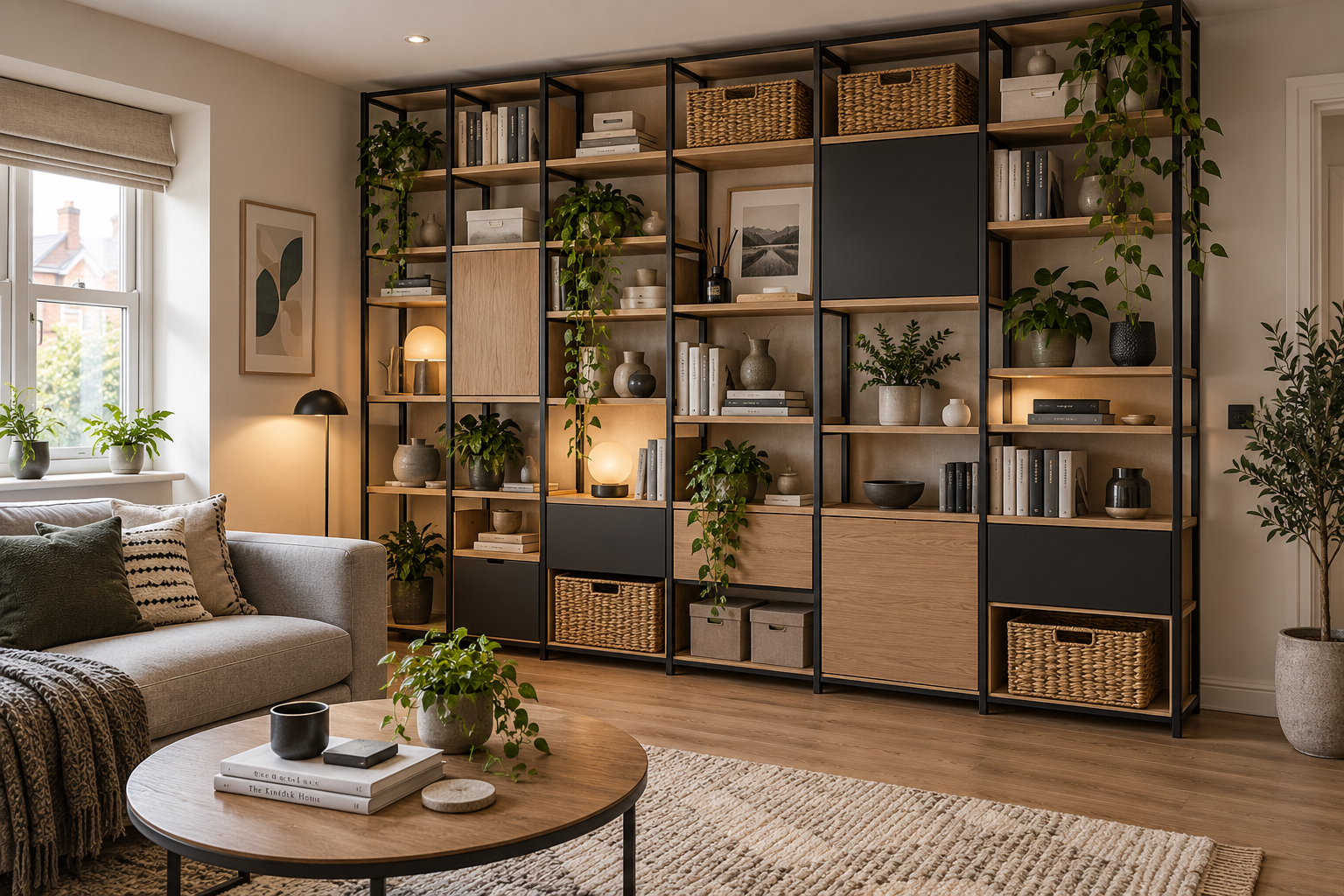
A lot of storage stops surprisingly early.
We put a cabinet against the wall, use the bottom half and leave a large section of empty wall above it.
Sometimes that's exactly what makes a room feel open.
But when storage is genuinely limited, looking upwards can make more sense than spreading outwards.
Tall shelving and floor-to-ceiling cabinets can provide considerably more storage while using roughly the same amount of floor space as their shorter alternatives.
That doesn't mean every wall should become a bank of cupboards.
One well-chosen vertical storage area can sometimes remove the need for several smaller pieces of furniture elsewhere in the room.
And if you're storing things particularly high up, the same rule applies as above the door: put the things you use least often at the top.
6. Around the windows
A window needs light and a clear view.
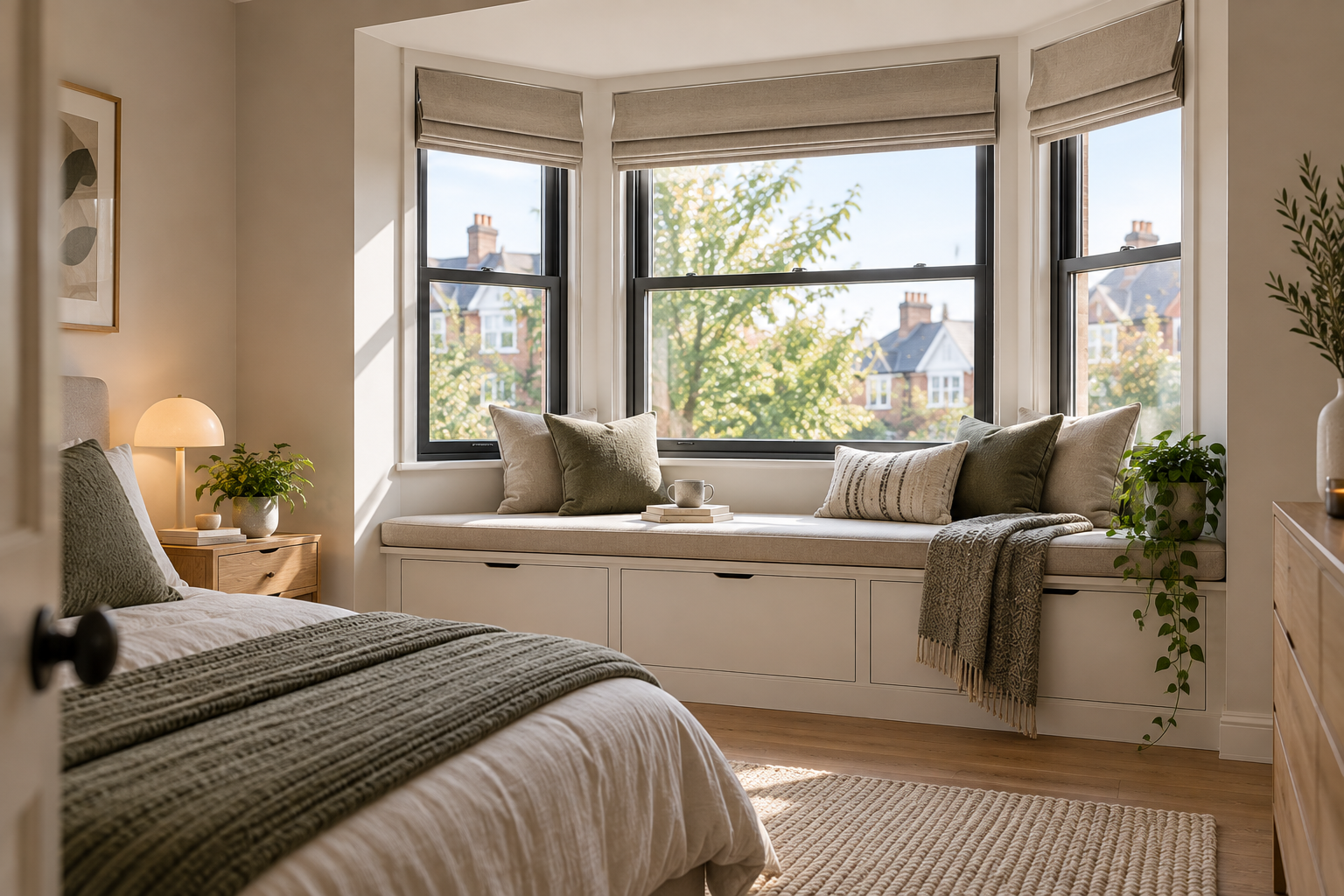
The wall around it doesn't necessarily need to be empty.
Shelving or cabinetry positioned either side of a window can use an area that might otherwise be difficult to furnish. In some rooms, storage can even continue above the window.
Then there's the space underneath.
Where the height and position of the window allow it, a built-in or freestanding bench can create somewhere to sit while providing storage below.
Done well, the result doesn't necessarily feel like you've squeezed more cupboards into the room.
It can feel like the storage was always supposed to be there.
Not every empty space needs filling
Once you start looking for unused areas, there's a danger of going too far.
That 12-centimetre gap beside the wardrobe doesn't automatically need a custom-made storage system.
Empty space has a purpose too.
It can make rooms easier to move through, allow light to travel further and stop a home from feeling as though every available centimetre has been given a job.
The goal isn't to maximise storage at all costs.
It's to find the places where adding useful storage could make the rest of the room work better.
Sometimes that means an entire fitted wall.
Sometimes it means a £15 basket underneath a bench.
Both can solve a problem.
Make the space earn its place
Good home organisation isn't necessarily about owning fewer things or finding somewhere clever to hide all of them.
It's about making the space you have work for the way you live.
Before buying another cabinet, look around the room.
Look underneath things.
Look above them.
Look at the awkward corner you've stopped noticing because it's always been awkward.
There might genuinely be nowhere else to put something.
But every now and then, the storage you need is already there.
It just doesn't look like storage yet.