
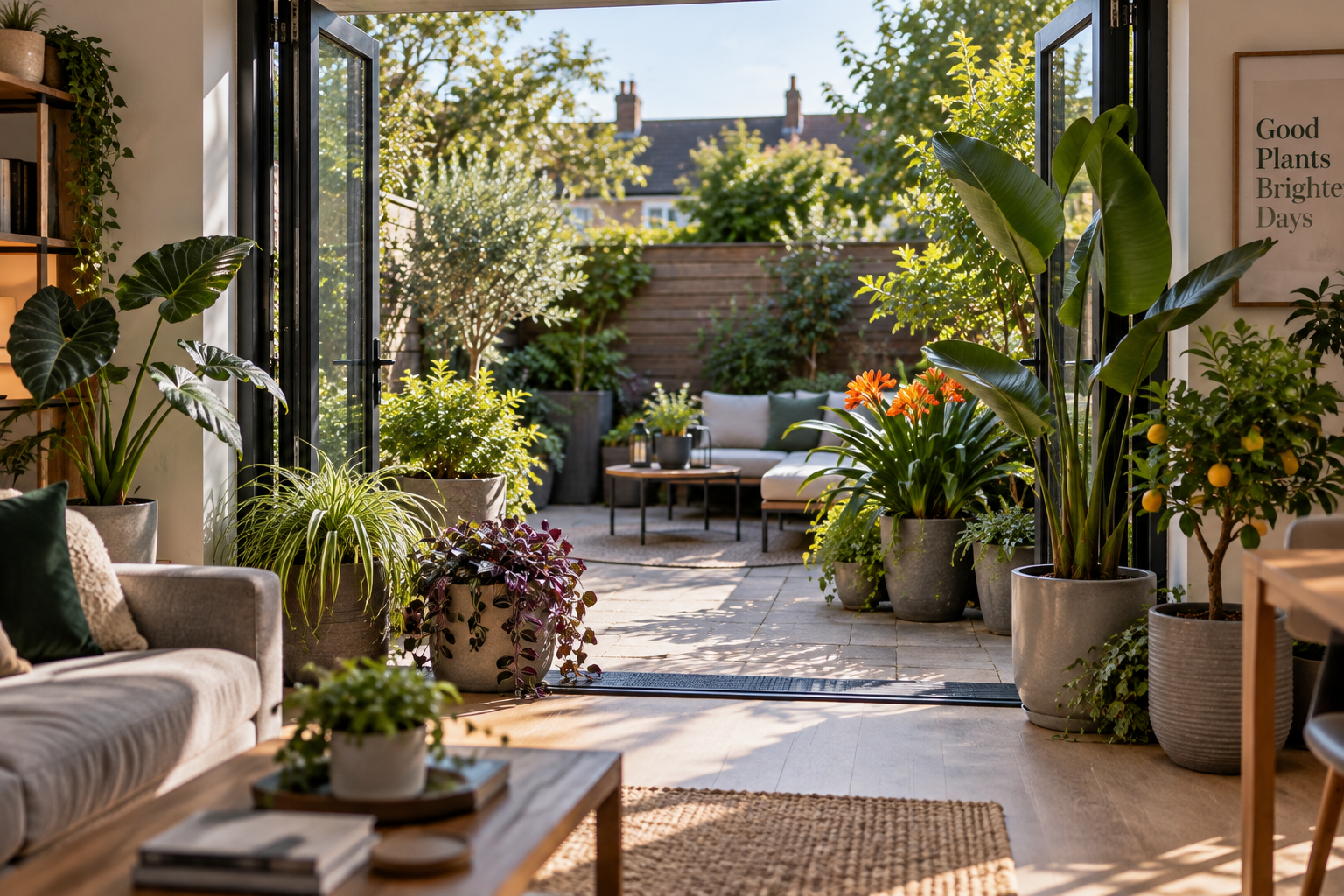
Why should a plant have to choose?
We tend to put plants into two fairly rigid categories.
Houseplants live inside. Garden plants live outside.
But some plants are perfectly capable of doing both.
During the warmer months, plants that have spent winter inside can move onto a balcony, patio or into the garden. When temperatures begin to fall, they can make the journey back indoors again.
For some plants, that summer outdoors can mean access to higher light levels, fresh air and rain. For us, it means the plants we already own can become part of our outdoor spaces rather than buying an entirely separate collection for summer.
There is a catch, though.
Moving a plant from your living room directly into strong summer sunshine isn't necessarily doing it a favour. Even plants that enjoy plenty of light can be damaged by a sudden change in conditions.
The trick is knowing which plants can make the move — and how to introduce them to their temporary second home.
Six plants that can make the move
There are far more plants that can spend part of the year outdoors than the six we've picked here. What works will depend on the plant, your local conditions and where you plan to put it.
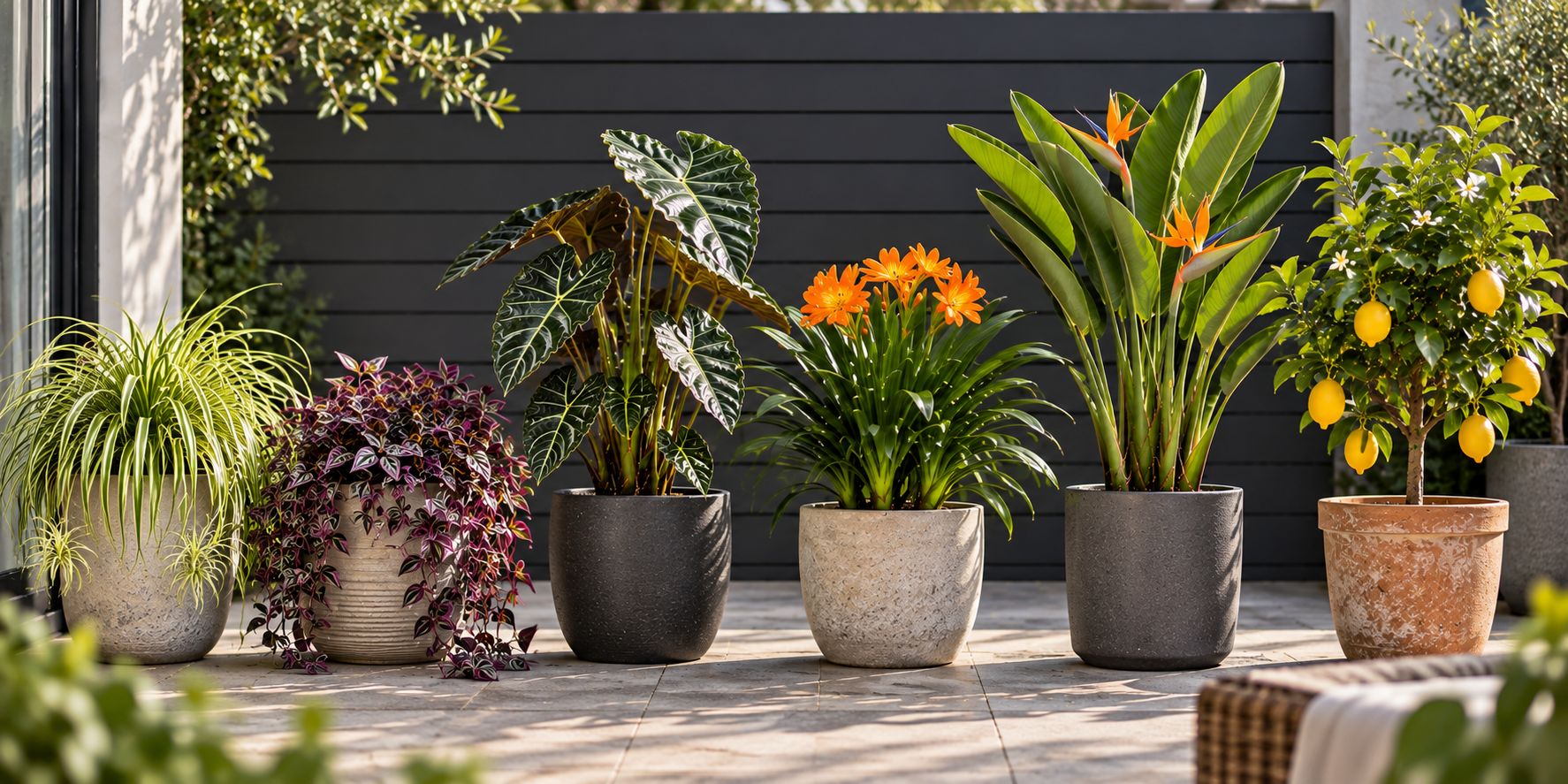
Think of these as examples rather than a definitive list. We've chosen six quite different plants to show what's possible — from familiar houseplants to larger statement plants and even something edible.
Spider plant
You might be used to seeing spider plants hanging from shelves or spilling over the edge of a bookcase, but they can also spend warmer periods outside.
Their arching leaves and trailing plantlets make them particularly suited to hanging baskets and raised containers, where they can become part of a balcony or patio display.
Choose a bright but relatively sheltered position rather than immediately exposing a plant that's been indoors to intense direct sunshine.
It's a simple way of giving one of the most familiar houseplants a completely different role for part of the year.
Tradescantia
Tradescantia is another plant that makes the indoor-to-outdoor transition particularly well visually.
Its trailing stems can tumble from pots, shelves and hanging baskets, bringing colour and texture to smaller outdoor spaces without taking up much floor space.
If you've already got one growing indoors, you don't necessarily need another plant to fill that summer container outside.
Move it gradually into brighter conditions and let it become part of the garden for a while.
Then, when temperatures start heading in the wrong direction, it can return home.
Alocasia
Alocasias can bring something very different outdoors.
Their large, dramatic leaves can make a patio or sheltered garden corner feel considerably more tropical — even if the view beyond the fence is unmistakably British.
Warmth matters here. These aren't plants to rush outside after the first sunny weekend of spring.
Once conditions are suitably warm, though, a sheltered position away from harsh direct sun can give an Alocasia an impressive summer home.
Because the foliage is large, protection from strong wind is worth considering too.
Clivia
Clivia is perhaps less obvious, which is exactly why it's interesting.
Often grown as an indoor or conservatory plant, it can spend the warmer part of the year outside in a sheltered position.
Its broad green leaves provide structure even when the plant isn't flowering, making it useful among other patio containers rather than looking like a houseplant that's simply been temporarily put outside.
Avoid strong, scorching sunlight and think of the move as a seasonal change of scenery rather than a permanent relocation.
Bird of paradise
A bird of paradise can make quite a statement indoors.
Move one outside and it can make an even bigger one.
Its large leaves work particularly well on a patio or beside outdoor seating, where a single established plant can provide plenty of impact without needing a collection of smaller pots around it.
Warm, bright and sheltered conditions are the aim, and the transition outdoors should be gradual.
It is also worth remembering that larger leaves can catch the wind surprisingly well. A protected position — and a suitably stable container — can save you from finding your tropical centrepiece lying horizontally across the patio.
Citrus
Citrus gives us a slightly different reason to blur the boundary between indoor and outdoor growing.
We're not talking about moving a fully grown citrus tree in and out of the house. Young citrus trees, dwarf varieties and smaller container-grown plants can be much more manageable, particularly while they're still relatively compact.
Lemon, lime and other citrus plants grown in pots can enjoy spending the warmer months outdoors before returning to a protected environment as conditions become colder.
They bring glossy evergreen foliage, fragrant flowers and, under the right conditions, fruit. That makes a potted citrus plant both decorative and productive.
A sunny, sheltered outdoor position can suit them well during summer, but exactly when a plant should move outside or return under protection will depend on the type of citrus and local temperatures.
As the plant grows, it may eventually become less practical to move regularly. Choosing a compact variety and keeping it in an appropriately sized container can make the indoor-outdoor approach manageable for longer.
Don't move them straight into the sun
Taking a plant outside isn't quite as simple as opening the door and finding an empty spot.
A plant that has spent months growing indoors has adapted to those conditions. Even beside a bright window, the intensity of outdoor sunlight can be substantially different.
Suddenly putting it into strong direct sun can result in scorched leaves.
Instead, make the transition gradually.
Start somewhere sheltered with gentler light and increase the plant's exposure over time if the species can tolerate it. Pay attention to how the plant responds rather than assuming more sunshine is always better.
Wind is another consideration. Large-leaved plants in particular can be damaged or knocked over in exposed positions.
And don't forget watering.
Once outside, pots can dry at a different rate because of warmer temperatures, stronger light and increased air movement. Rain may help, but don't assume a passing shower has thoroughly watered a container — particularly one with dense foliage.
Moving outside changes the plant's environment, so your care routine may need to change with it.
Before they come back inside
Eventually, the outdoor holiday has to end.
For many tender plants, falling night-time temperatures are the signal to start thinking about moving them back under protection. There isn't one temperature that applies to every plant, so check the needs of the particular species you're growing rather than waiting for the first frost.
But temperature isn't the only thing to check.
Take a good look at the plant before bringing it back into your home.
Inspect the leaves, stems and surface of the compost for insects or other unwanted passengers. A plant that's spent several months outside has been part of an ecosystem that you probably don't want to recreate beside the sofa.
It's also worth removing dead or damaged growth and checking whether the pot itself needs cleaning.
Once indoors, the plant's requirements can change again. Lower light levels and reduced growth can mean it uses water more slowly, so continuing an outdoor summer watering routine through autumn and winter could leave the compost unnecessarily wet.
The journey back inside should be treated as another change in growing conditions — not simply a change of address.
One plant, two spaces
There is something appealing about the idea that our indoor and outdoor spaces don't need completely separate collections of plants.
A spider plant hanging in the living room through winter might spend summer on the balcony. A bird of paradise can move from beside the sofa to the patio doors. A citrus tree can become part of the garden for the warmer months before returning under protection.
It won't work for every plant, every home or every climate.
But that's also the point.
Rather than automatically thinking of a plant as indoor or outdoor, it can be worth asking a slightly different question:
Where would this plant be happiest right now?
Sometimes the answer might be on the other side of the door.