
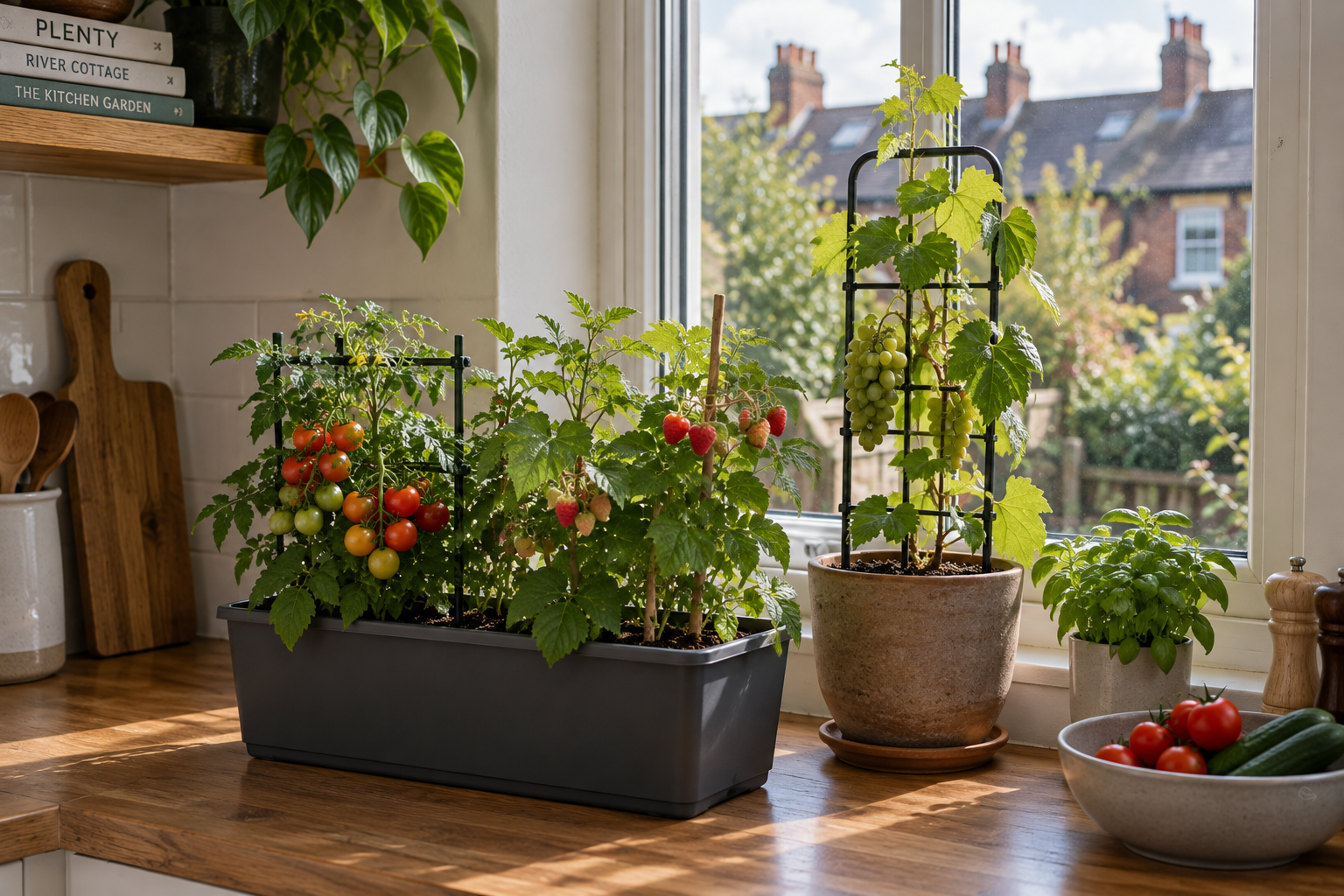
Small plants can still produce proper food
Small-space food growing used to come with a fairly predictable list: herbs, salad leaves, perhaps a few strawberries and, if you were feeling ambitious, a tomato plant.
That's changing.
There is a growing range of fruit and vegetable varieties bred to stay smaller, grow well in containers or make better use of spaces such as balconies and patios.
Some are compact versions of familiar garden crops. Others can trail from hanging baskets or sit on a tabletop. You can even find grape vines that stay remarkably small.
It means having limited outdoor space doesn't necessarily mean limiting yourself to a few herbs on the windowsill.
Here are seven compact crops that show just how much you can potentially grow when space is at a premium.
Dwarf tomatoes
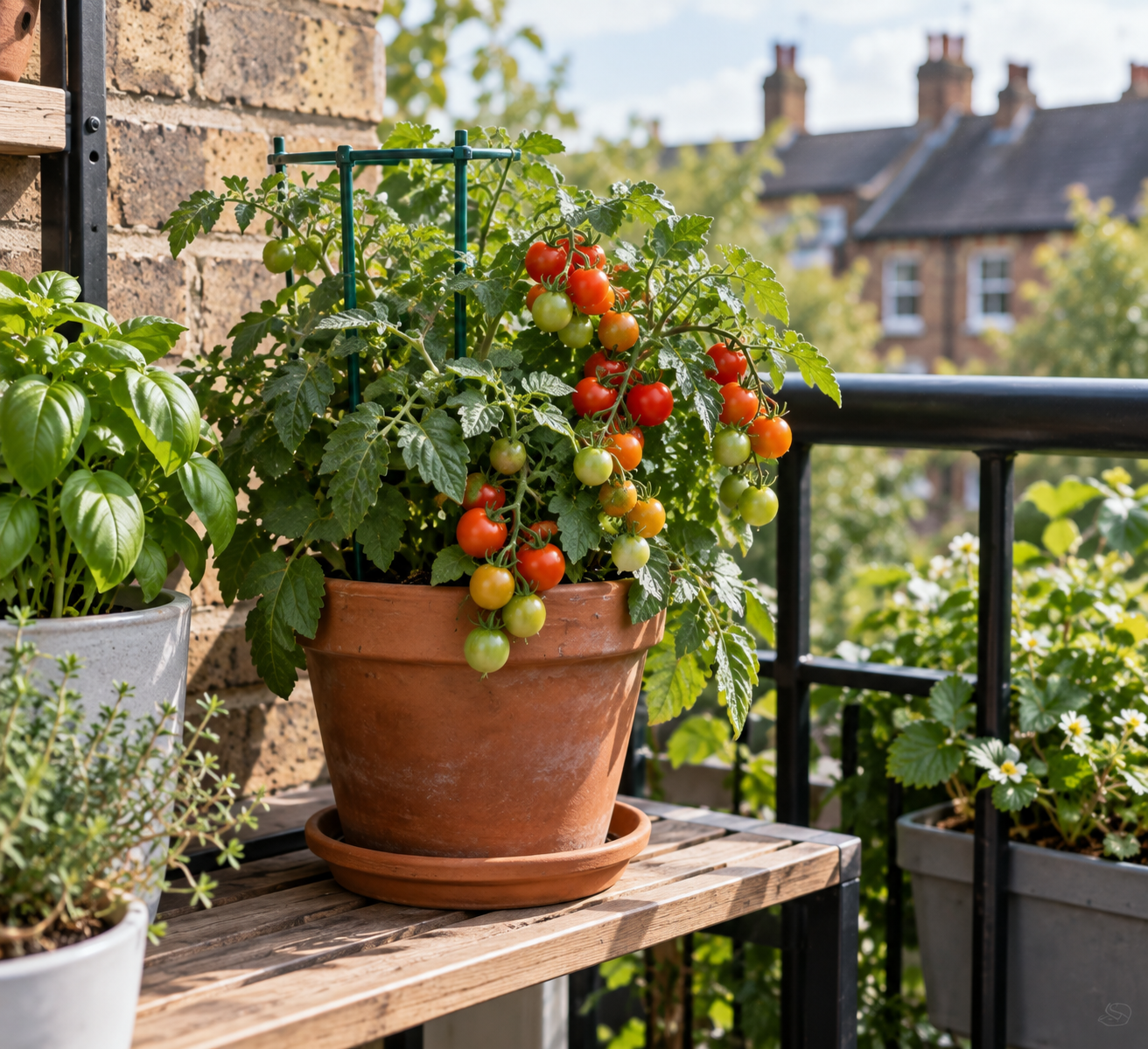
Tomatoes are already well suited to container growing, but dwarf and compact bush varieties can make them even easier to fit into smaller spaces.
Rather than producing long vines that require substantial supports, many compact varieties develop into smaller, bushier plants while still producing a useful crop. There are also trailing varieties that can grow over the sides of containers and hanging baskets.
A sunny balcony, patio or small garden can therefore be enough to grow your own tomatoes without giving half the available space to one plant.
There are plenty of varieties to choose from, so check the expected mature size rather than assuming every tomato described as suitable for containers will stay particularly small.
Tabletop chillies
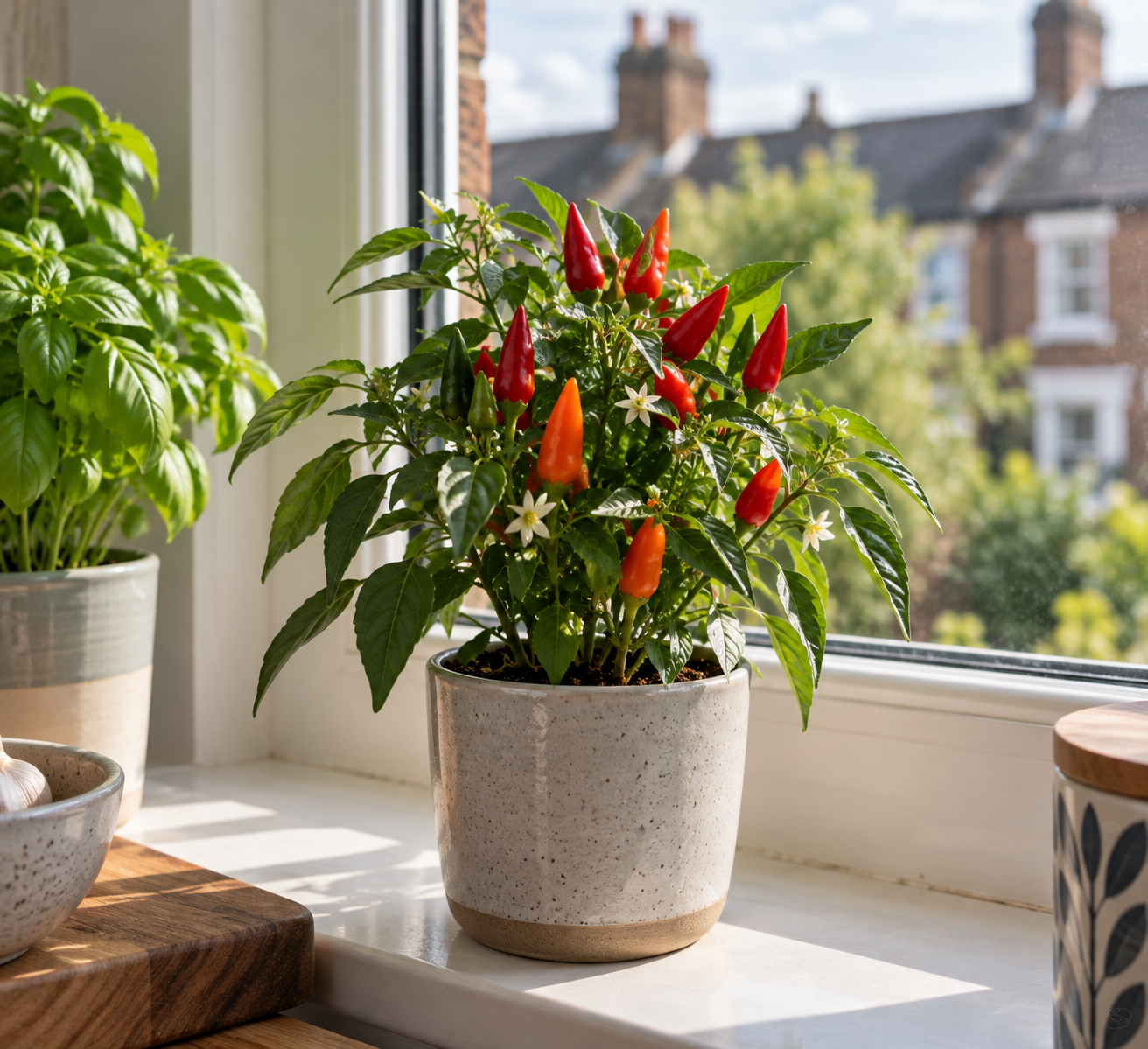
Some compact chilli plants are small enough to grow on a table, shelf or other sunny surface while still producing plenty of colourful fruit.
That makes them particularly interesting for balconies and patios where every bit of floor space matters.
They can also be surprisingly decorative. A healthy compact chilli covered in red, orange or purple fruit can look almost like an ornamental plant — except this one can eventually end up in your dinner.
Chillies generally appreciate plenty of warmth and light, so give your best sunny position to them if you can.
Compact aubergines
Aubergines probably aren't the first vegetable you'd associate with a small garden.
Compact varieties make them much more realistic.
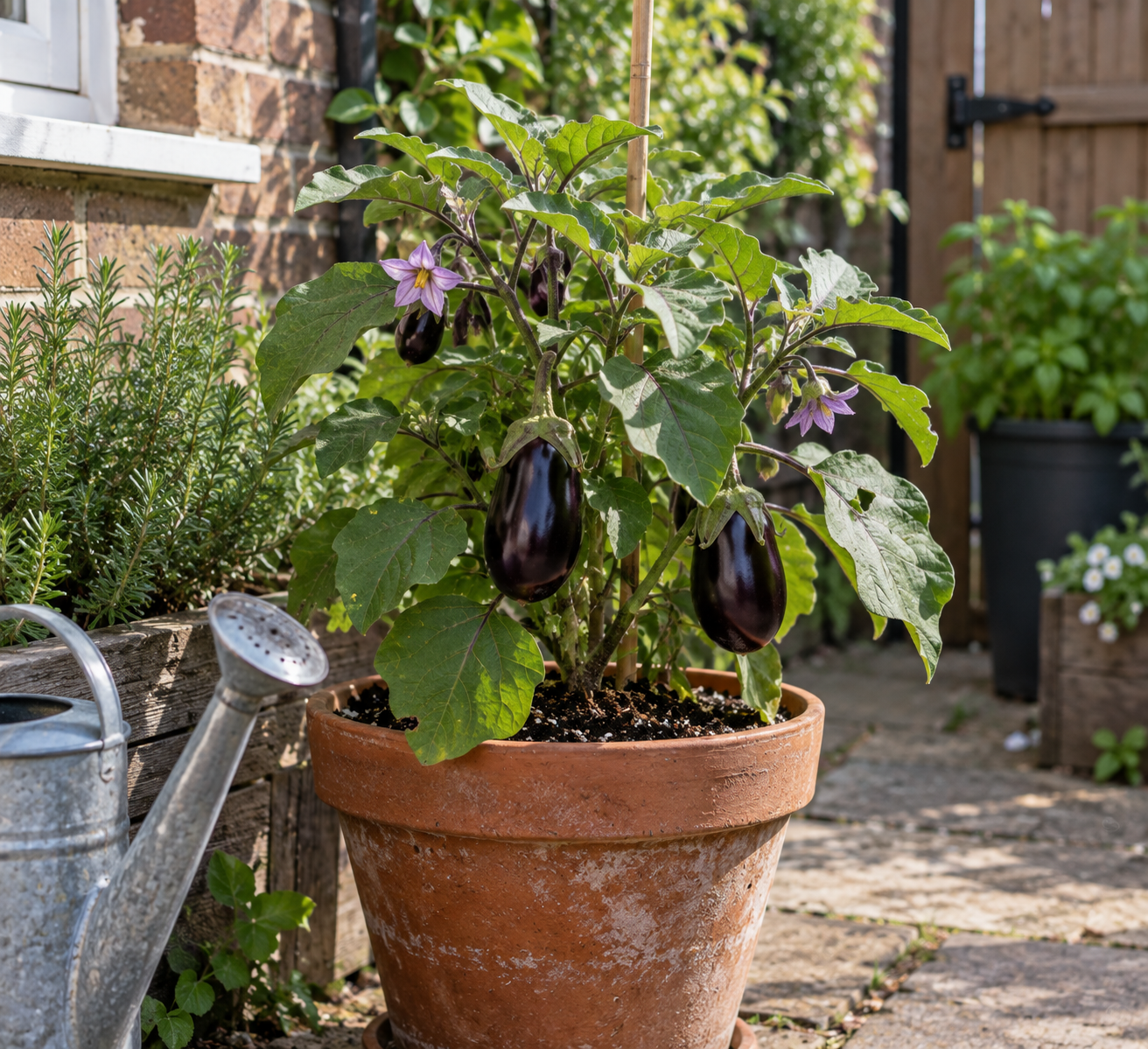
These smaller plants can be grown in containers while still producing the distinctive glossy fruits you'd expect from a much larger plant. Their broad leaves and colourful fruit also make them one of the more attractive edible plants to have sitting on a patio.
They enjoy warmth, so a sunny and sheltered position is particularly useful.
You may not be producing supermarket quantities of aubergines from one compact plant, but that's not really the point. Growing something you'd normally associate with a vegetable patch from a container is part of what makes these plants interesting.
Hanging-basket cucumbers
Growing cucumbers when you're short on space sounds slightly optimistic.
Growing them above that space makes things more interesting.
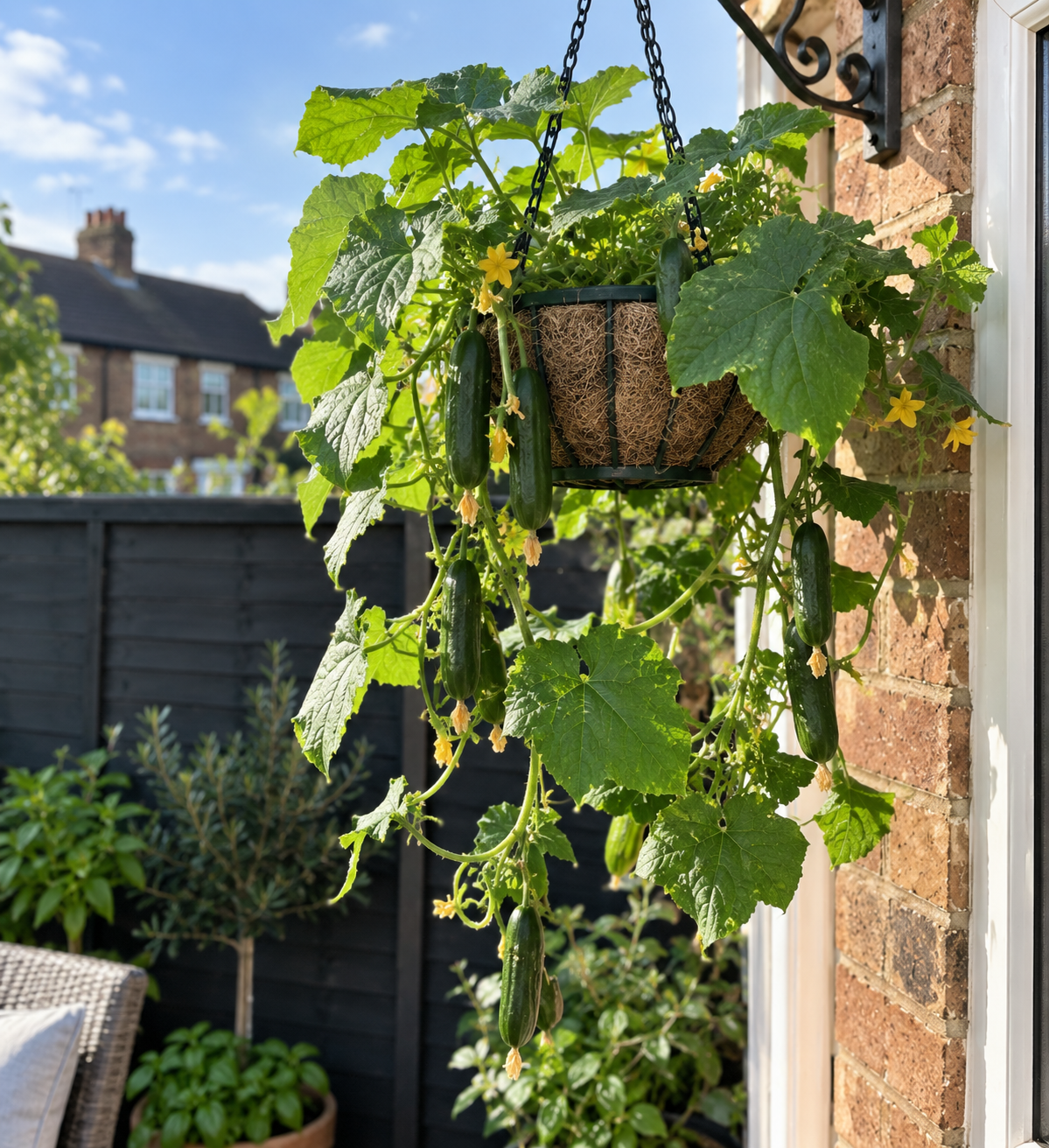
Compact and trailing cucumber varieties can be grown in containers or hanging baskets, allowing their growth to hang down rather than spread across the patio.
It's a good example of how small-space gardening isn't always about finding the smallest possible plant. Sometimes it's about changing where and how you grow it.
A strong hanging basket in a sunny, sheltered position can turn an otherwise unused part of your balcony or patio into productive growing space.
Just remember that containers suspended above the ground can dry out relatively quickly, particularly during warm weather.
Compact raspberries
Traditional raspberry canes aren't exactly known for keeping themselves to themselves.
Compact varieties are a different proposition.
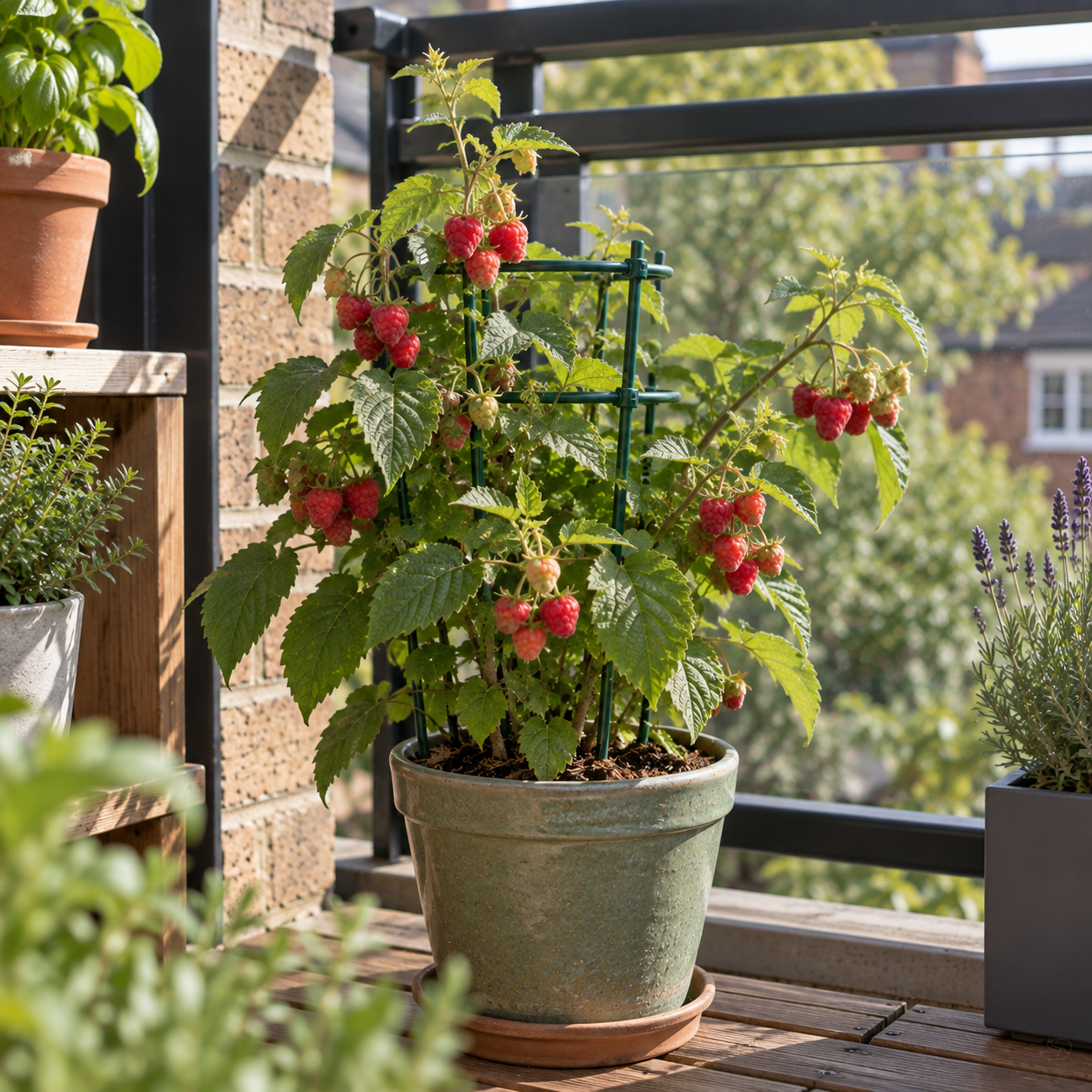
Some dwarf raspberries grow into relatively small, self-supporting plants, making it possible to grow raspberries in a large container without creating an entire raspberry patch.
They're particularly appealing if you'd like to grow something that can stay with you for several years rather than starting again with a new crop every season.
A sunny patio, terrace or balcony could therefore become home to a fruit that many people would normally associate with a much larger garden.
Dwarf grape vines
Yes, grapes.
A traditional grape vine can become enormous, which makes the idea of growing one in a small space sound slightly questionable.
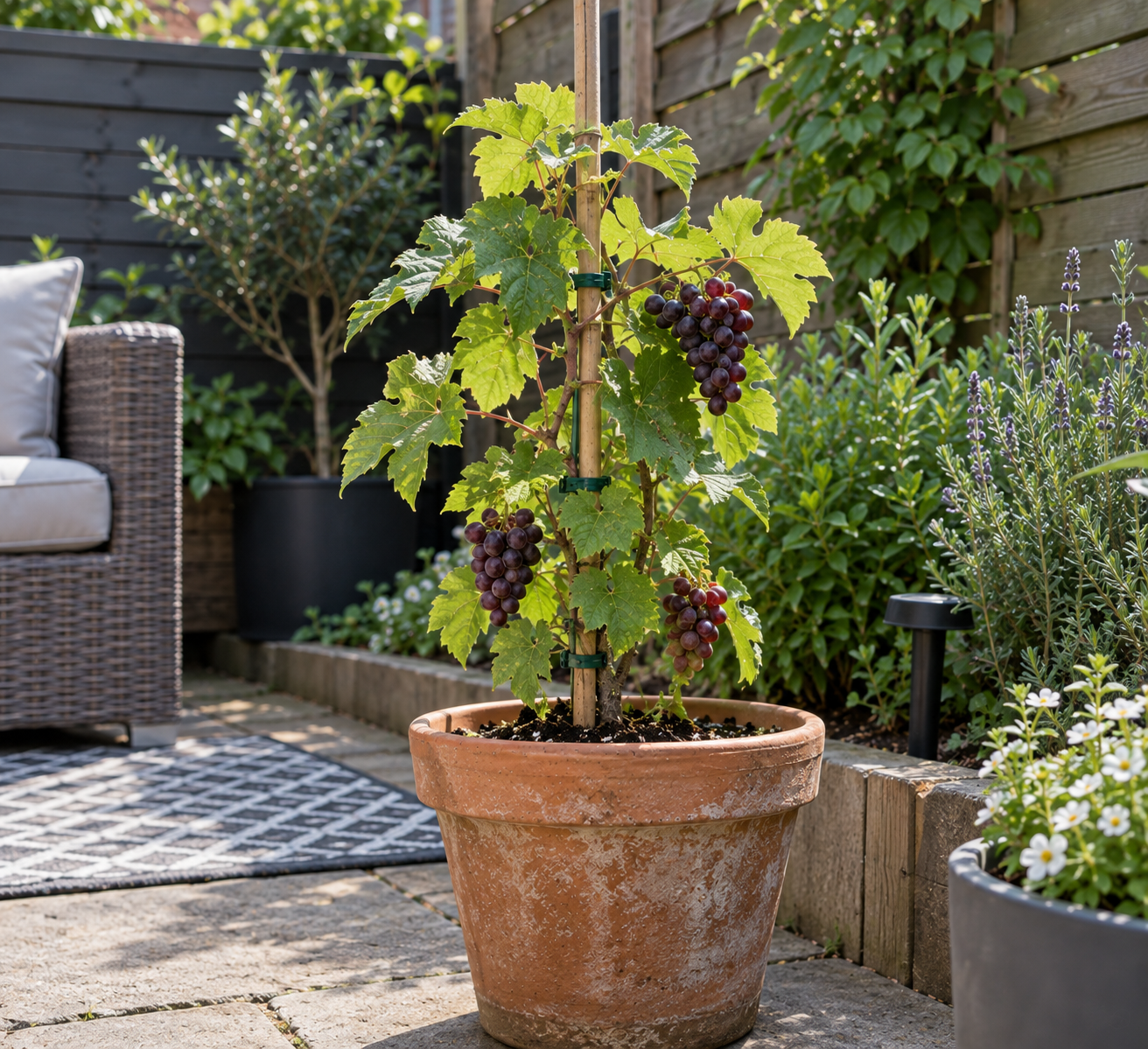
But genuinely compact grape vines are now available that have been bred to remain dramatically smaller than conventional vines while still producing grapes.
That opens up the possibility of growing one in a container on a patio or in another sunny small-space setting where a traditional vine would simply be impractical.
It's also one of the best examples of why dwarf edible plants are so interesting. They're not simply miniature plants created for novelty. They can make crops that previously seemed unrealistic for a particular space genuinely worth considering.
Compact blackcurrants
Blackcurrants aren't as dramatic as a tiny grape vine, but they can be a very practical small-space fruit.
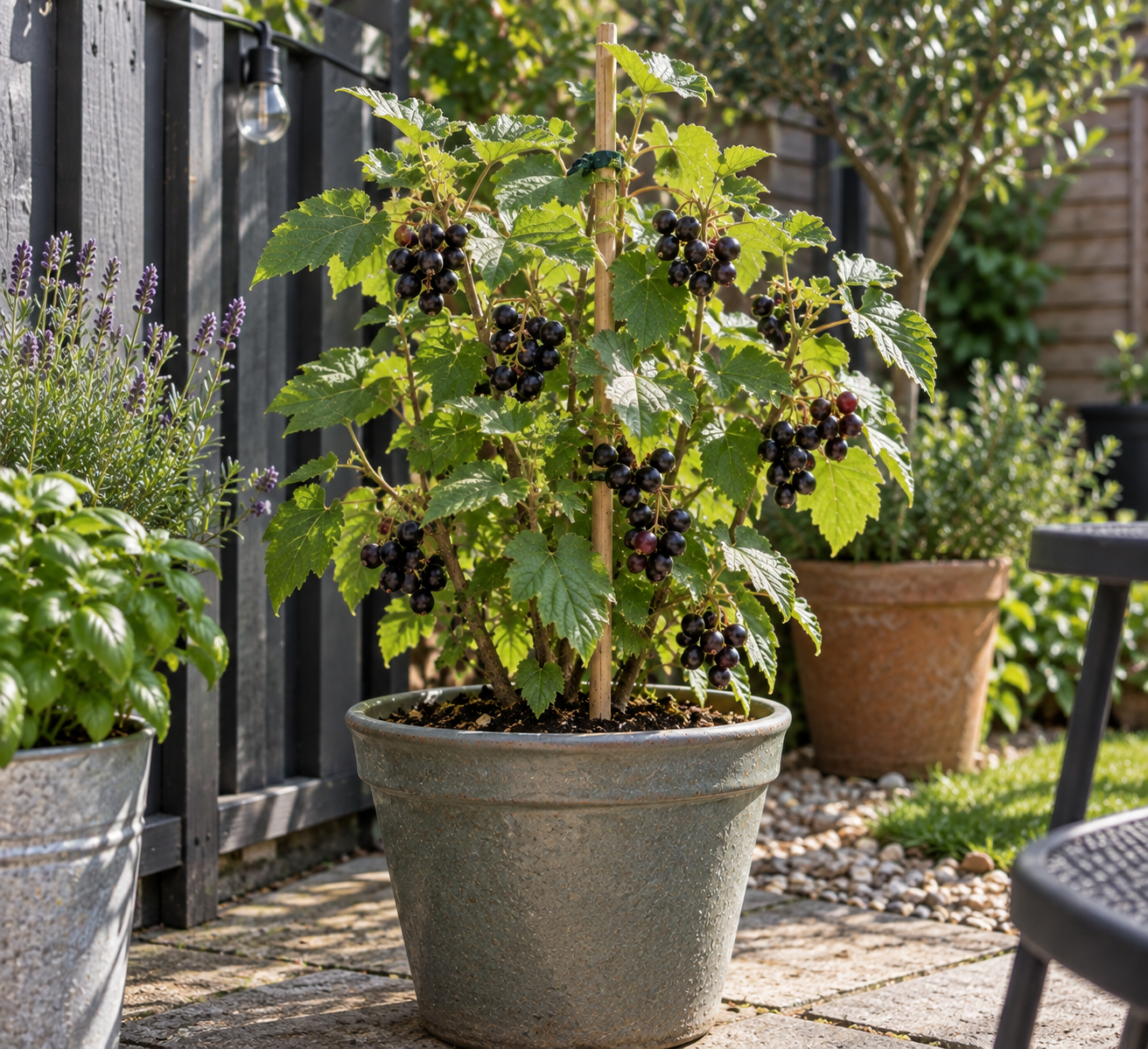
Compact varieties can be grown in substantial containers, making them an option for patios and smaller gardens where planting a full-sized fruit bush in the ground isn't practical.
They'll need more room than something like a tabletop chilli, so this isn't necessarily the plant for the smallest balcony. But if you've got space for one larger container, a compact fruit bush can make good use of it.
It's another example of thinking beyond annual vegetables when planning a small edible garden. Some of your limited growing space can be given to plants that return and produce fruit over multiple years.
Small-space growing is becoming a lot more interesting
The exciting thing about dwarf fruit and vegetables isn't simply that plants are getting smaller.
It's that the list of things you can realistically consider growing in a limited space is getting bigger.
A hanging basket can produce cucumbers. A patio container can hold a raspberry plant. A sunny table can grow chillies. And somewhere that would never accommodate a conventional grape vine might still have room for a dwarf one.
Of course, dwarf doesn't mean maintenance-free.
Compact plants still need enough root space, suitable light, regular watering and the right growing conditions. Choosing a smaller variety can't compensate for putting a sun-loving plant somewhere that barely sees the sun.
But that's part of making a small growing space work: rather than asking “What would I grow if I had a bigger garden?”, start with “What could work well in the space I've actually got?”
Choose one crop that suits your conditions and start there.
You might have less growing space than someone with a vegetable patch.
That doesn't mean it can't be productive.